
Visual summaries and checklists
Use these to brief teams, standardise files, and reduce disputes. On mobile, use the bullet summaries and open the full diagram if you want the visual version.
- Landlord checklist: templates, evidence packs, Form 4 rent rises, pets workflow, standards, registration, and records.
- Letting agent checklist: onboarding packs, advertising rules, playbooks, audit trails, training, and QA.
- Tip: keep one folder per property. If you cannot prove a step, treat it as incomplete.
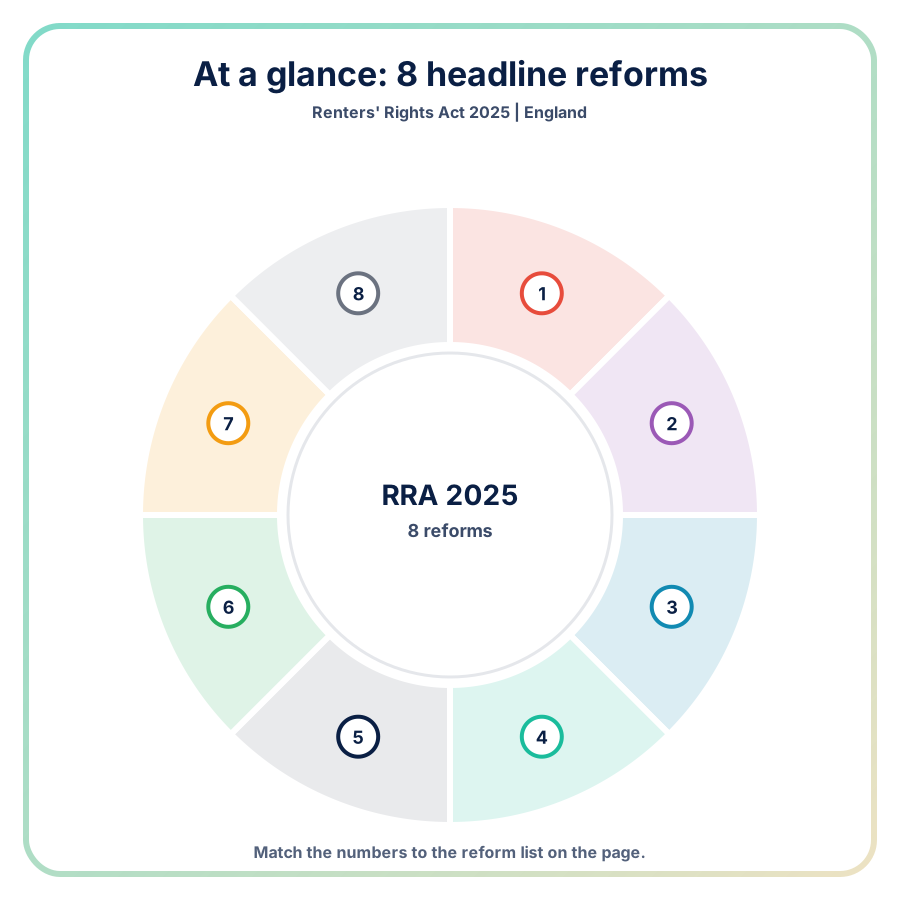
- Section 21 no fault possession removed. Possession is evidence based via Section 8 grounds.
- Fixed terms replaced by periodic tenancies by default.
- New notice timing rules including a protected period plus longer routes for sale or move in.
- Mandatory PRS registration for landlords and properties.
- Mandatory Ombudsman membership and complaint handling expectations.
- Decent Homes standard with stronger damp and mould response duties.
- Rent rises restricted to Form 4 once per 12 months with tribunal challenge risk.
- Ban on rental bidding wars. No accepting offers above the advertised rent.
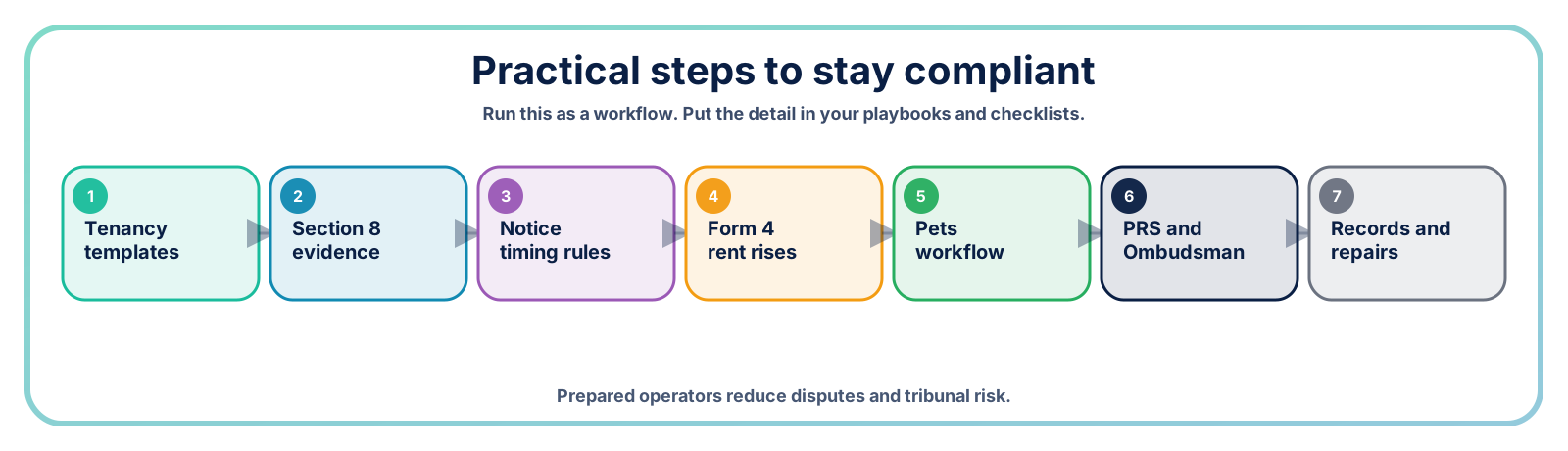
- Update tenancy templates: periodic by default, remove fixed term assumptions, add pets and Form 4 language.
- Section 8 evidence packs: map each ground to documents, logs, proof of service, and timelines.
- Notice timing rules: protected period, sale or move in routes, and calendar guardrails.
- Form 4 rent rises: once per 12 months, comparables stored, tribunal ready file.
- Pets workflow: decide within 42 days, record reasons, align insurance.
- PRS and Ombudsman: registration data maintained, memberships current, fees budgeted.
- Records and repairs: damp and mould logs, inspections, contractor evidence, certificates, and notices.
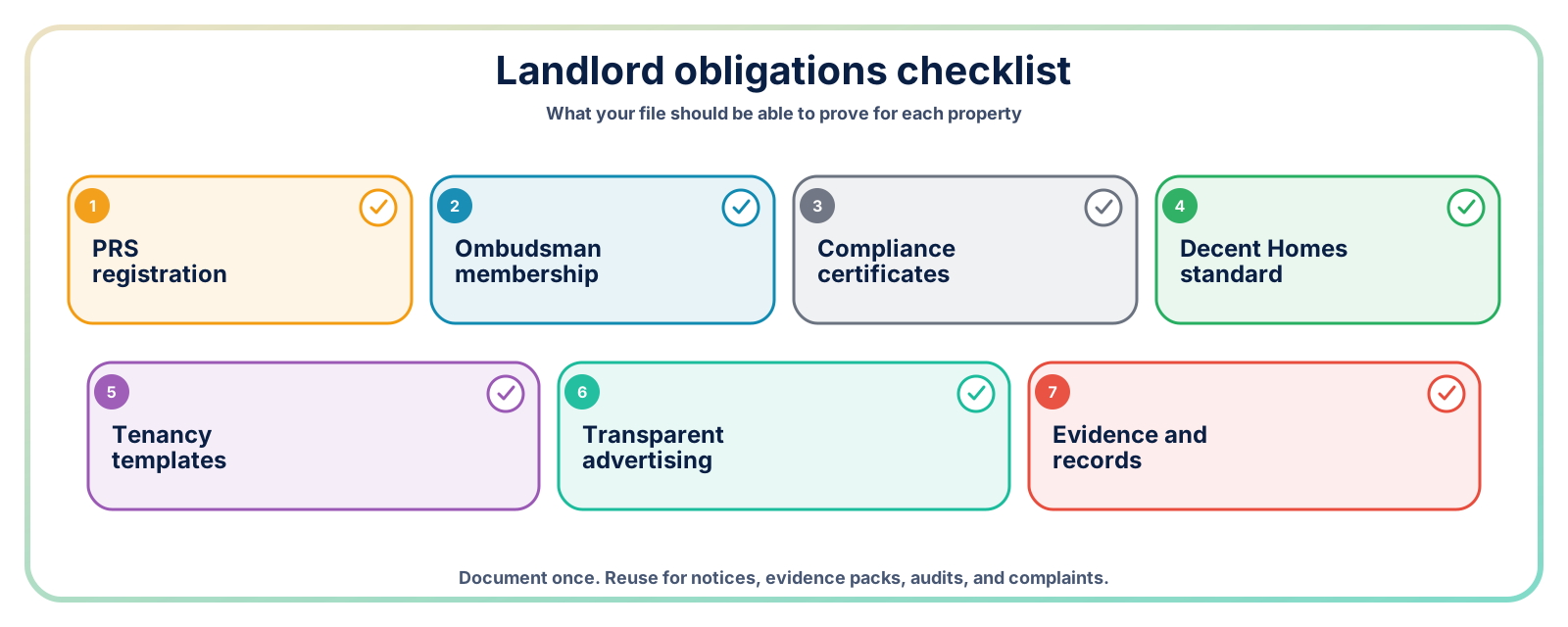
- PRS registration: landlord and property details kept accurate and up to date.
- Ombudsman membership: redress scheme active with a complaint handling trail.
- Compliance certificates: Gas Safety, EICR, EPC, deposit scheme evidence and proof of service.
- Decent Homes standard: damp and mould response, safety repairs, and documented timelines.
- Tenancy templates: periodic clauses, rent rise wording, pets wording, and notice process alignment.
- Transparent advertising: clear advertised rent and no bidding wars.
- Evidence and records: rent ledgers, notices, proof of service, comms logs, repair logs, and Section 8 packs.
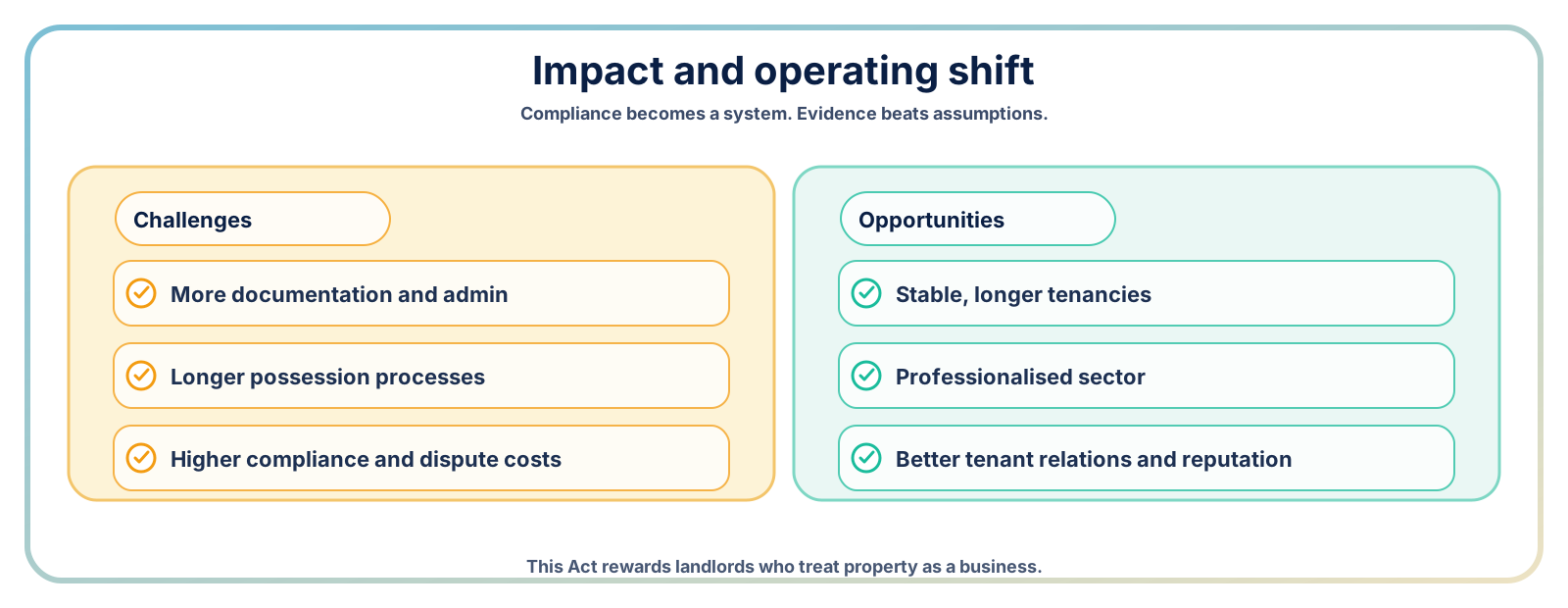
- Challenges: more documentation and admin, longer possession processes, higher compliance and dispute costs.
- Opportunities: stable tenancies, professionalised operations, better tenant relations and reputation.
When does the Act come into force?
The core provisions of the Renters' Rights Act take effect on 1 May 2026. Enforcement duties for councils begin 27 December 2025.
| Date | Milestone | Action required |
|---|---|---|
| 27 Oct 2025 | Royal Assent | Legislation becomes law |
| 27 Dec 2025 | Council enforcement powers begin | Councils must act on housing complaints |
| 1 May 2026 | Core tenancy reforms go live | All ASTs convert to periodic tenancies |
If you run training for staff or landlords, aim to cover Section 8 evidence, rent notice timing, and pet request handling before May 2026.
Evictions: Section 21 ends, Section 8 becomes the route
Can landlords still use Section 21 notices after May 2026?
No. Section 21 "no-fault" evictions are banned from 1 May 2026. Landlords must use Section 8 with a valid legal ground to regain possession.
What are the valid grounds for eviction under Section 8?
| Ground | Name | Notice period | Evidence required |
|---|---|---|---|
| 1 | Landlord intends to move in | 4 months | Signed statement of intent |
| 1A | Sale of property | 4 months | Proof of marketing / sale agreement |
| 4A | Student accommodation | 2 weeks | Prior written notice served before tenancy start |
| 8 | Serious rent arrears | 2 weeks | 2+ months arrears, documentation required |
| 14 | Antisocial behaviour | Immediate | Incident reports, police statements |
Rent increases: Section 13 (Form 4)
Rent may only be increased once every 12 months using a Section 13 Notice (Form 4). Tenants can challenge excessive hikes at the First-tier Tribunal.
| Condition | Rule |
|---|---|
| Frequency | Once per 12 months |
| Mechanism | Section 13 Notice (Form 4) |
| Challenge route | First-tier Tribunal within 1 month of notice |
| Retroactive increase | Banned |
| Tribunal risk | Rent cannot exceed proposed rate |
Tenancy structure, pets, and bidding wars
What tenancy structure replaces fixed-term contracts?
All tenancies become open-ended periodic contracts from 1 May 2026. Fixed terms and automatic end-dates are no longer valid.
Tenants may leave with 2 months' notice. Landlords may only regain possession under Section 8 with valid grounds. Renewal fees become obsolete.
Can landlords refuse pets under the new law?
Blanket bans on pets are illegal. Landlords must consider each pet request individually and respond reasonably.
- No additional pet deposits or rent allowed.
- Landlord must respond to a pet request within 42 days.
- Rejection must be based on evidence (for example, unsuitable property).
Are rental bidding wars still allowed?
No. Accepting rent offers above the advertised price is banned. Letting agents and landlords must adhere to the listed rental amount.
What is the 12-month protected period?
Landlords cannot evict a tenant for the first 12 months unless using specific mandatory grounds like antisocial behaviour. This provision ensures new tenancies come with a minimum guarantee of stability.
Registration, redress, and enforcement
What is the Private Rented Sector database?
A national register of landlords and their properties, launching in 2026. Registration is mandatory. Non-compliance is punishable by fines.
What is the Property Ombudsman scheme?
A mandatory redress scheme for tenants to resolve disputes with landlords outside of court. All landlords must register or face penalties.
What are Rent Repayment Orders (RROs)?
RROs allow tenants to reclaim up to 12 months' rent from landlords who violate legal duties. They now apply to superior landlords as well.
How should letting agents prepare?
A clean rollout plan is to audit templates, train staff on the new evidence and notice rules, and update internal software workflows so compliance is tracked automatically.
Audit all contracts
Remove fixed terms, check Section 8 clauses, and update templates for periodic tenancies.
Train staff
Cover eviction, rent increase, and discrimination rules so notices are issued correctly.
Use Vordex
Automate contract checks, detect unlawful clauses, and generate registration-ready packs for landlords.
Update software
Track rent increase eligibility, document issuance, and safety inspections.
Communicate changes
Issue landlord guidance kits and update tenant FAQs before May 2026.
Summary: key obligations and how Vordex helps
| Area | Legal change | Vordex solution |
|---|---|---|
| Evictions | Section 21 banned | Eviction Notice Compliance Check |
| Pets | Blanket bans illegal | Clause Scanner & Policy Generator |
| Rent increases | 1/year via Form 4 | Automated Notice Builder |
| Student lets | Require prior written notice | Ground 4A Validator |
| Tenancy type | Periodic by default | Contract Rewriter |
| Repairs & safety | Awaab's Law enforced | Repair SLA Monitor |
| Discrimination | DSS / family bans outlawed | Ad Copy Compliance Filter |
| Ombudsman / PRS registration | Mandatory | Registration Tracker + Enforcement Alerts |
Vordex is your full-stack compliance engine for the Renters' Rights Act. Stay ahead of fines, retain landlords, and automate legal due diligence in seconds.
Ready to protect your portfolio? Start Free Scan or Book Compliance Demo.
Glossary
Key terms used on this page.
- Periodic tenancy
- A rolling tenancy with no fixed end date, usually continuing month-to-month.
- Section 13 Notice
- A legal notice used by landlords to propose a rent increase under the Housing Act 1988.
- Section 8 Notice
- A formal notice seeking possession of a property based on specific legal grounds such as arrears or antisocial behaviour.